Your restaurant website design is doing more work than you think. Before most guests ever see your dining room, taste your food, or meet your staff, they have already checked you out online. And what they find on your website often decides whether they come in at all.
So what do diners actually want when they land on a restaurant website? Owner.com asked 1,300 U.S. restaurant guests that exact question in a 2024 survey. The answers are clear, practical, and good news for owners: you don’t need a fancy site. You need a few things done right.
Here’s what the data says, what it means for your restaurant, and what to do about it.
Most diners find new restaurants on Google
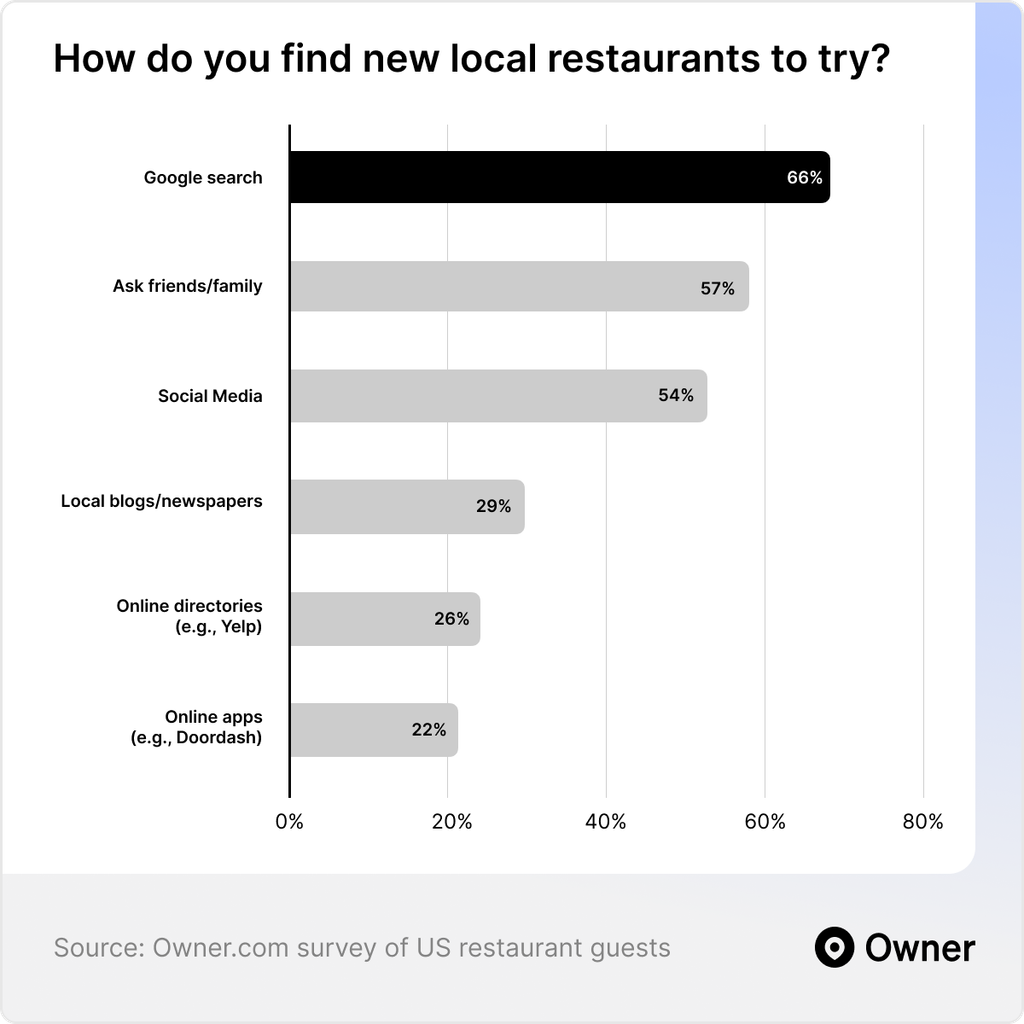
Two out of three guests (66%) say Google search is their go-to way to discover a new place to eat. That means your spot in search results and on Google Maps matters as much as your sign out front.
And search is changing. More people now skip the search bar and simply ask ChatGPT, Siri, or Google’s AI, “Where should I eat tonight?” These tools can’t taste your food. They read about you online and decide whether you’re a safe bet to recommend.
Your website is the one place where you control that story. When it clearly states what you serve, where you are, and when you’re open, Google, Apple Maps, and AI tools can understand you and send people your way. When it’s outdated or missing, they recommend the restaurant down the street that’s easier to understand.
What to do:
- Say what you serve and where in your homepage headline (for example, “Wood-fired pizza in downtown Phoenix”)
- Keep your name, address, phone, and hours identical on your website, Google Business Profile, and Apple Maps
- Give popular dishes their own spot on your menu page so you show up for searches like “best birria tacos near me”
Your website is your first impression, even for dine-in
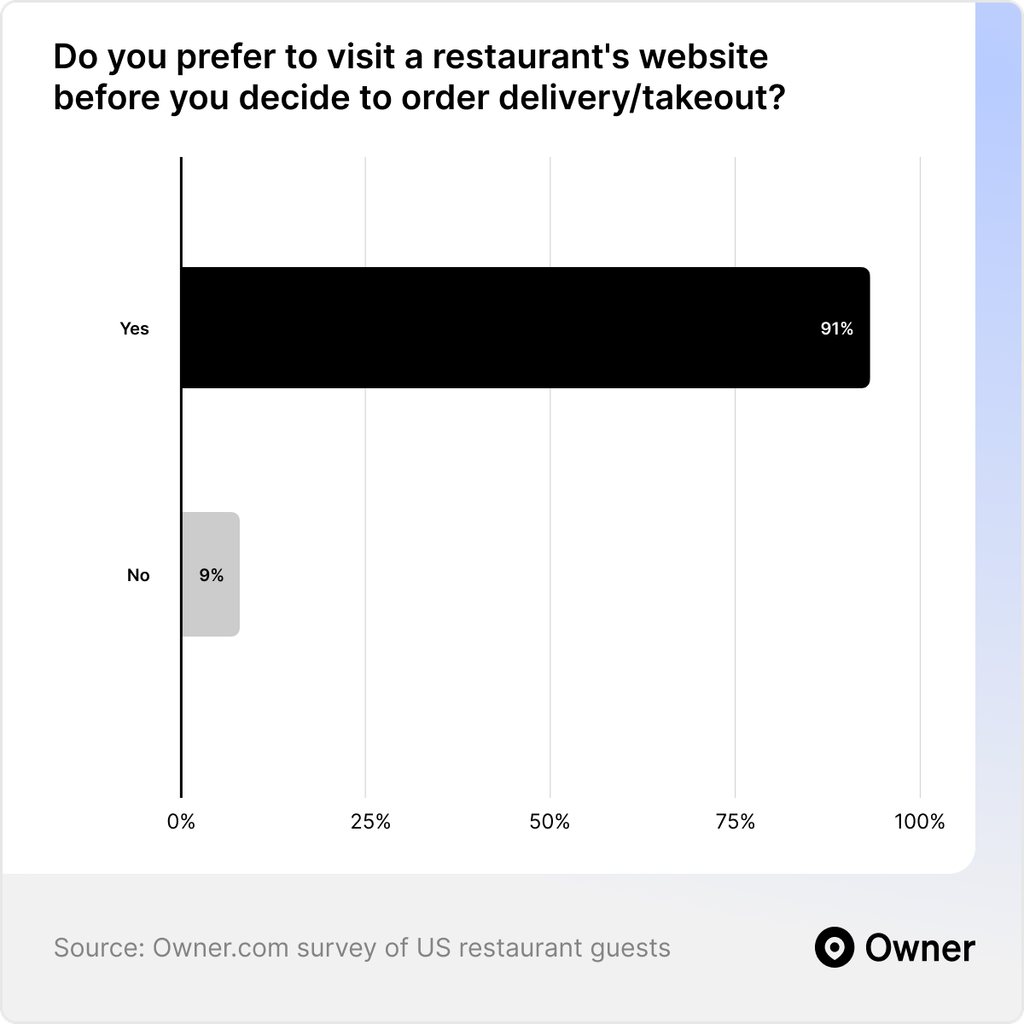
91% of guests visit a restaurant’s website before ordering takeout or delivery. Even for sit-down meals, 72% check the website before they visit.
That surprises a lot of owners who think, “We’re mostly dine-in, so the website doesn’t matter much.” It does. Guests may also read reviews on Yelp or Google, but they still come to your site for the facts and to get a feel for who you are.
You have a few seconds to make that impression count. Two things do most of the work:
- A clear headline at the top. Tell people what makes you special in one line, like “Family recipes from Sicily, made fresh daily in Mesa.”
- Your best dishes, front and center. People eat with their eyes. One great photo of your signature dish beats a page full of text.
The menu is the main event
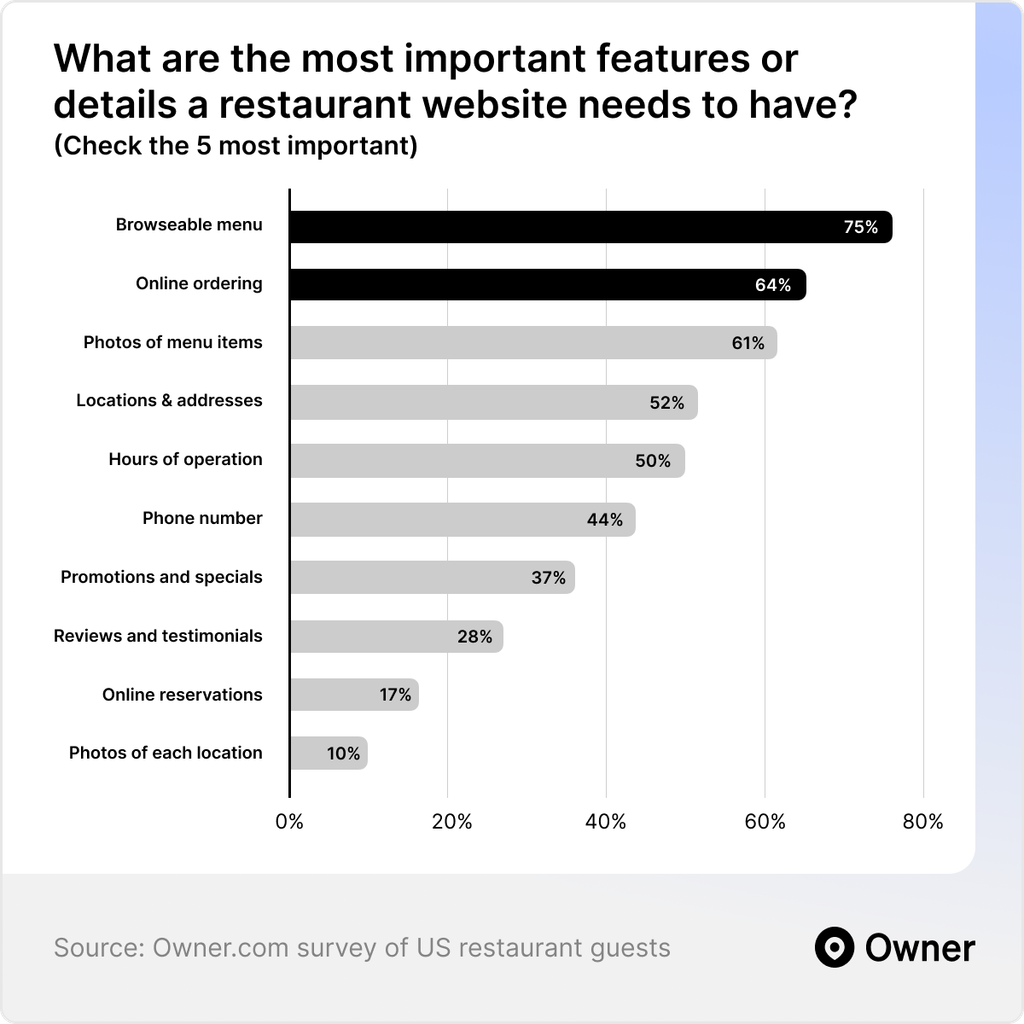
If your website has one job, it’s showing off your menu. 80% of guests say the menu is the main reason they visit a restaurant’s site. Three out of four (75%) expect to browse it online, and 84% look at photos of dishes before deciding to order.
Here’s where many restaurants lose people. The homepage looks fine, then the menu opens as a PDF or a photo of the paper menu. On a phone, that means pinching, zooming, and squinting. Guests give up and pick somewhere easier.
A PDF menu also hurts you behind the scenes. Google and AI tools have a hard time reading menus stuck in PDFs and images, so they know less about what you serve and are less likely to recommend you.
What a good online menu looks like:
- Real text, not a PDF or image, so people and search engines can read it
- A clear photo for your popular dishes
- Short, tasty descriptions with key ingredients
- Simple categories (starters, mains, drinks) that are easy to scroll on a phone
- Prices that are current
A clunky website costs you orders, and regulars
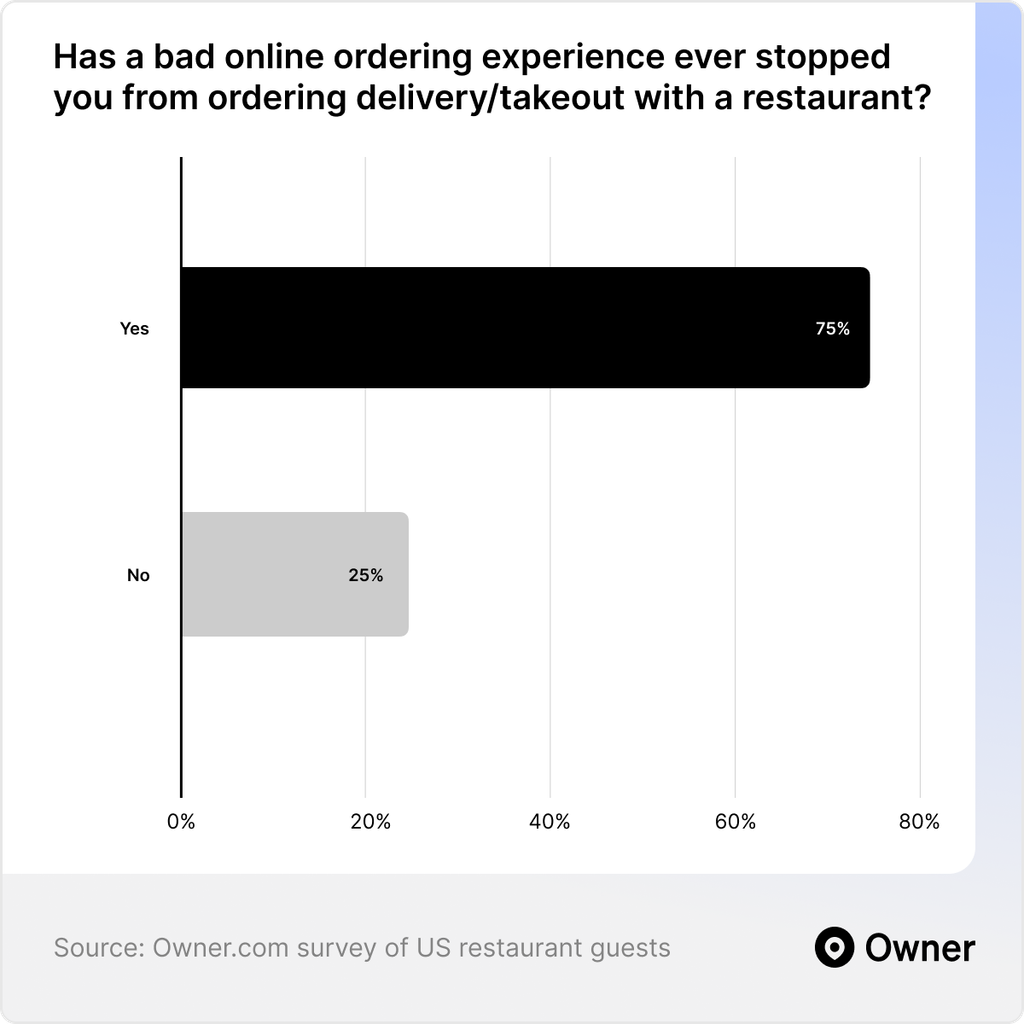
A bad online experience doesn’t just annoy people. It sends them elsewhere. 75% of guests say a poor ordering experience has stopped them from ordering, and 69% say a confusing or badly designed website makes them less likely to order.
The flip side is just as powerful. 87% of guests say they’re more likely to order again from a restaurant with a great online experience. A first-time guest might push through a frustrating site once. They probably won’t come back for a second round.
That matters because for many restaurants, the real profit comes from the second, third, and tenth visit. A smooth website helps turn one-time guests into regulars.
Keep it simple:
- Make the site load fast on phones
- Put “Order Online,” “Call,” and “Directions” buttons where thumbs can find them
- Use a clean, familiar layout instead of something flashy and confusing
- Make checkout quick, with options like Apple Pay and as few form fields as possible
Reviews and specials give people a reason to choose you
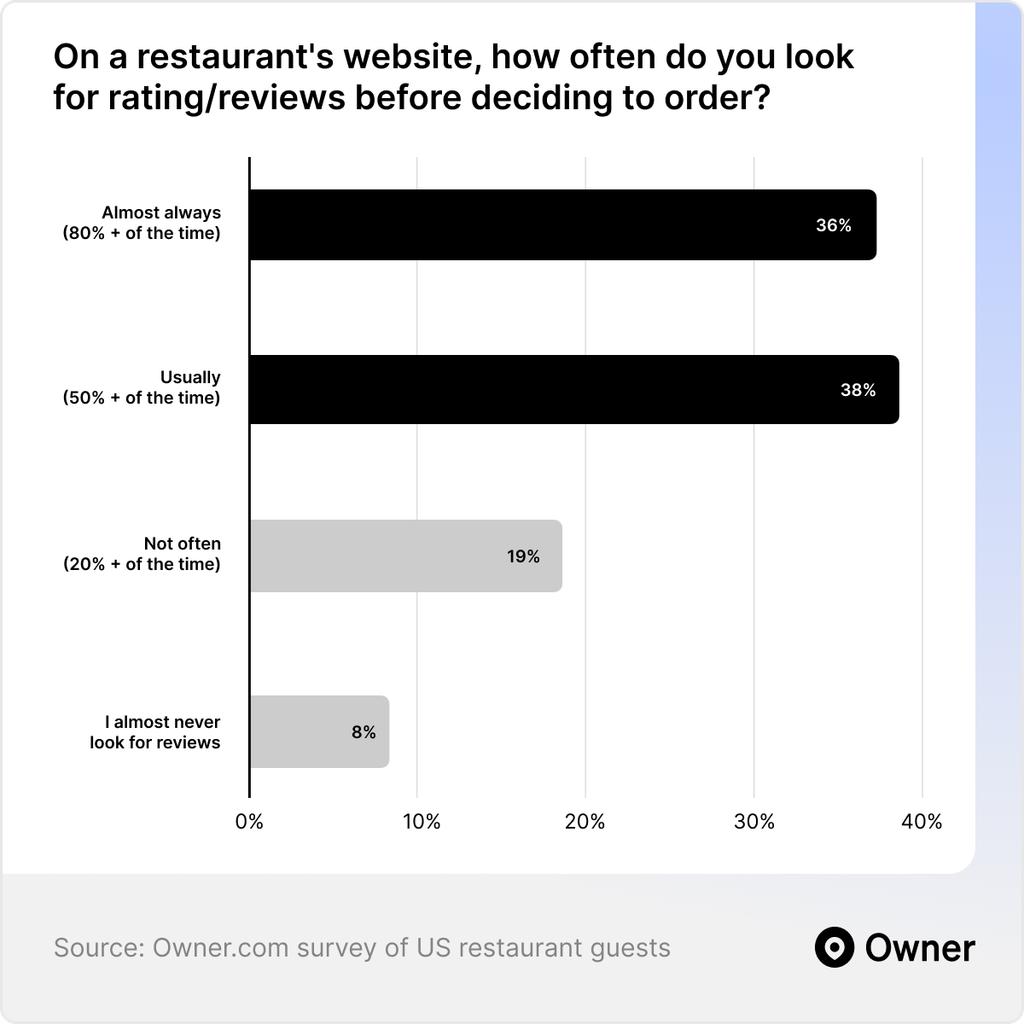
About three out of four guests (74%) look for reviews or ratings on a restaurant’s website. The same share (74%) check for specials or promotions before ordering. Here’s how to boost reviews for your restaurant.
Guests trust what other diners say. Showing a few great reviews right on your site, especially next to popular dishes, gives them confidence without sending them off to another app where your competitors are one tap away.
Specials work the same way. A simple offer like “$5 off orders over $40” or a weekly happy hour gives people a reason to pick you today instead of “sometime.”
Easy wins:
- Add three to five of your best Google reviews to your homepage
- Keep a specials or events section that you update regularly
- Remove expired promotions so the site always feels current
Quick checklist: is your website helping or hurting?
Pull up your website on your phone and see how many of these you can check off:
My homepage headline says what I serve and where I am
My menu is real text, not a PDF or a photo
My popular dishes have good photos
My hours, address, and phone number match Google and Apple Maps
The site loads quickly on a phone
Guests can call, get directions, or order in one tap
I show real reviews from happy guests
My specials and prices are up to date
If you checked fewer than six, your website is probably sending customers to someone else.
Get a modern restaurant website for $1,500
You don’t need to become a web designer to get this right. You just need a site built around what diners actually want.
CyberMark builds restaurants a custom, modern 6-page website for $1,500 one time. It’s live in 7 to 10 business days, and it includes:
- A readable, mobile-friendly menu that people and AI tools can understand
- A homepage that shows off your best dishes and tells guests what makes you special
- One-tap buttons to call, get directions, or connect to your online ordering
- Setup that helps you get found on Google, Apple Maps, and AI search
If your average table spends $60, the site pays for itself after about 25 extra tables. Want more info? Click here and fill out the form.
We’re a Phoenix agency that’s been helping local businesses get found online since 1994. Send us a message and let’s get more people finding you, trusting you, and walking through your door.